 larry
larrySustainable eating is choosing food that nourishes your body while supporting the health of the planet, from the way it’s grown and raised to how it reaches your plate and what happens to the waste. This approach considers the environmental footprint of your meals, favoring foods that use fewer natural resources, generate less pollution, and respect animal welfare and human communities throughout the supply chain.
The concept matters more in 2026 than ever before. Food production accounts for roughly a quarter of global greenhouse gas emissions, uses 70% of freshwater supplies, and drives significant deforestation and biodiversity loss. Yet these impacts aren’t distributed equally across all foods. A single dietary shift, like choosing plant-based proteins over beef twice a week, can reduce your carbon footprint more than buying exclusively local produce. The power lies in understanding which choices move the needle.
What makes sustainable eating compelling is its flexibility. There’s no single prescription, no rigid rulebook demanding perfection. Instead, the approach recognizes that meaningful change happens through informed decisions repeated over time. You don’t need to overhaul your entire diet overnight or commit to labels that feel restrictive or inaccessible.
This article breaks down exactly how sustainable eating works in practice, exploring the key components that define it and the practical ways you can apply these principles to everyday meals. You’ll discover which food choices create the most significant environmental impact, how different approaches to sustainable eating compare, and where to start based on your current habits and priorities. Whether you’re curious about reducing waste, supporting regenerative farming, or simply making choices that align with your values, you’ll find a clear framework that respects both your lifestyle and the planet’s limits.
What Sustainable Eating Means
Sustainable eating is about choosing food that nourishes you while protecting the planet and supporting the people who produce it. It’s not a rigid diet or a set of rules, think of it as a mindful approach to eating that considers the full story behind what’s on your plate.
At its heart, sustainable eating rests on three interconnected pillars that work together to create a healthier food system.
The environmental pillar focuses on reducing your food’s ecological footprint. This means favoring foods grown with practices that preserve soil health, conserve water, and minimize greenhouse gas emissions. When you choose seasonal produce from nearby farms or opt for plant-based meals a few times a week, you’re lightening the environmental load. You’re also reducing the demand for industrial farming methods that deplete natural resources and harm biodiversity.
The social pillar centers on fairness and equity throughout the food chain. It asks whether the farmers, farmworkers, and food processors who bring your meals to life earn fair wages and work in safe conditions. Supporting brands and producers that prioritize worker wellbeing helps build a food system where everyone thrives, not just consumers and corporations.
The economic pillar emphasizes viability for both producers and communities. Sustainable eating supports food systems that keep money circulating locally, strengthen regional economies, and help small-scale farmers stay in business. When you shop at farmers markets or choose products from companies committed to fair pricing, you’re investing in economic resilience.
Why does this matter? For the planet, sustainable eating helps combat climate change, protect wildlife habitats, and preserve clean water and fertile soil for future generations. For you personally, it often means fresher, more nutrient-dense foods and the satisfaction of knowing your choices align with your values. You’re not just feeding yourself, you’re participating in a food system that works for everyone.
How Sustainable Eating Works in Practice
The Food System Connection
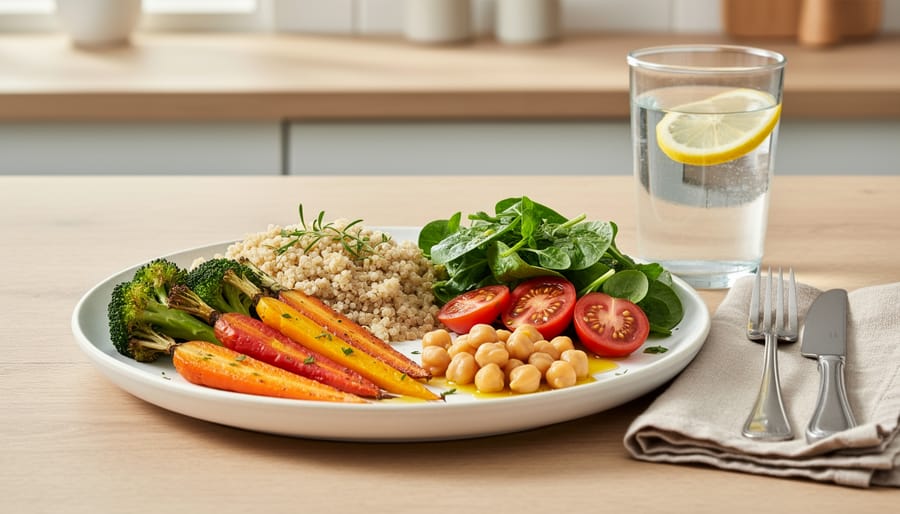
Every bite you take connects to a vast network of farms, processing facilities, distribution centers, retailers, and waste systems that together form our global food system. Sustainable eating recognizes these connections and works with them rather than against them. When you choose locally grown vegetables at a farmers market, you’re shortening supply chains that otherwise burn fossil fuels transporting produce across continents. When you pick organic grains, you’re supporting agricultural practices that rebuild soil health instead of depleting it with synthetic chemicals.
Your choices send economic signals upstream. Increased demand for plant-based proteins encourages farmers to diversify their crops. Buying imperfect produce reduces the forty percent of food that gets wasted before reaching consumers. These purchasing patterns gradually reshape what producers grow, how they grow it, and what infrastructure gets built to support different food pathways.
The connection runs both ways. Industrial farming practices that prioritize yield over sustainability create environmental costs, depleted aquifers, eroded topsoil, polluted waterways, that eventually circle back to affect food security and nutritional quality. Sustainable eating breaks this cycle by supporting regenerative systems. Learning to reduce food waste at home complements these efforts, just as understanding why recycling matters for packaging helps close the loop on consumption.
Your Plate, Your Impact
Every time you sit down to eat, you’re casting a vote for the kind of food system you want to support. It sounds abstract, but the math is surprisingly straightforward: the average person makes over 200 food decisions daily, and each one sends signals back through the supply chain.
When you choose a locally grown apple over one shipped from overseas, you reduce transportation emissions by up to 90%. When you opt for plant-based meals a few times a week, you shrink your dietary carbon footprint by roughly 25%. These aren’t feel-good estimates, they’re documented impacts that compound over months and years.
The beauty of sustainable eating is that change happens incrementally. You don’t need to overhaul everything overnight. Start by tracking one week of meals and notice patterns: where your food comes from, how much packaging it carries, what goes to waste. Most people discover they already make some sustainable choices without realizing it.
Your plate becomes a personal laboratory for testing what works in your life. Maybe you swap beef for chicken twice weekly, saving about 6.5 pounds of CO2 per meal. Perhaps you start buying imperfect produce, rescuing food that would otherwise go to landfill. Small shifts, repeated consistently, create the measurable change that transforms both your health and the planet’s.
The Building Blocks of Sustainable Eating
Sustainable eating isn’t one rigid diet or a set of commandments, it’s a collection of principles you can mix and match to fit your life. Think of these components as a toolkit rather than a checklist, where you choose the practices that resonate with your values, budget, and daily reality.
- Plant-Forward Eating
- Centering meals around vegetables, fruits, legumes, nuts, and whole grains while reducing (not necessarily eliminating) animal products. This approach significantly lowers your environmental footprint while offering nutritional benefits and culinary variety.
- Local and Seasonal Foods
- Choosing ingredients grown or produced near you and eating what’s naturally ripe in your region. This reduces transportation emissions, supports nearby farmers, and often delivers fresher, more flavorful food.
- Organic and Regenerative Agriculture
- Supporting farming methods that avoid synthetic pesticides, rebuild soil health, and work with natural ecosystems rather than against them. Regenerative practices go further by actively restoring land and capturing carbon.
- Minimal Waste Approaches
- Reducing food waste through careful planning, creative use of scraps, composting, and choosing products with less packaging. Since roughly one-third of food produced globally goes uneaten, this component carries substantial impact.
- Ethical Sourcing
- Selecting products that ensure fair wages, safe working conditions, and dignity for everyone in the supply chain, from farmworkers to processors. This dimension recognizes that sustainability extends beyond environmental concerns to human wellbeing.
- Whole Foods Focus
- Prioritizing foods in their natural or minimally processed state over heavily refined products. Whole foods typically require less energy to produce, come with less packaging, and offer superior nutrition.
The beauty of this framework lies in its adaptability. Maybe you start by committing to two plant-based dinners each week. Perhaps you join a community-supported agriculture program to access local produce. You might focus first on reducing your kitchen waste before tackling other areas. Each entry point holds value.
Some people gravitate toward the environmental pillar, tracking their carbon footprint and choosing climate-friendly proteins. Others prioritize the social dimension, researching labor practices and supporting cooperative farms. Many find the economic angle most accessible, discovering that dried beans and seasonal vegetables actually stretch their grocery budget further than processed convenience foods.
You’ll also notice these components overlap and reinforce each other. Buying local often means eating seasonal, which naturally leads to more whole foods and less packaging. Choosing plant-forward meals typically reduces waste since vegetables spoil less quickly than meat. Organic farms frequently employ regenerative practices that support ethical labor standards.
This interconnectedness means progress in one area creates positive momentum elsewhere. You’re not juggling separate obligations but rather weaving together complementary habits that become second nature over time. The key is starting where you are, with what you have, and building from there without pressuring yourself to adopt every practice immediately.

Where Sustainable Eating Applies in Daily Life
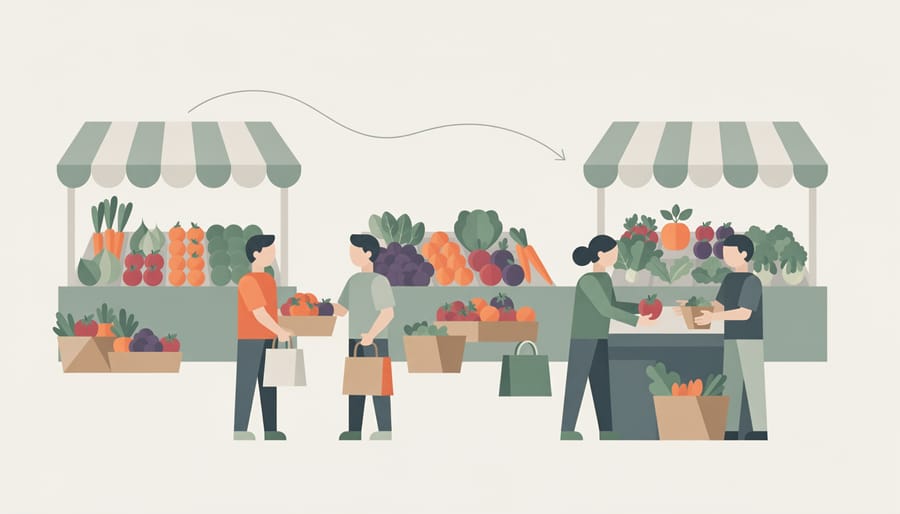
Sustainable eating shows up everywhere once you start noticing. It’s not confined to your kitchen or reserved for special health-food stores, it weaves through your daily routines in ways that feel surprisingly natural.
Your weekly grocery run becomes an opportunity rather than a chore. Farmers markets let you meet the people growing your food and learn how they farm. Co-ops and local health food stores often carry regional products with transparent supply chains. Even conventional supermarkets now feature better options: look for produce from nearby farms, choose items with minimal packaging, and skip the pre-cut fruit drowning in plastic. Reading labels becomes second nature, you’ll spot certified organic, Fair Trade, and regeneratively grown products more easily each time.
- Shopping at farmers markets where you can ask growers about their practices directly
- Choosing restaurants that source locally and list farm partners on their menus
- Meal prepping with seasonal ingredients to reduce waste and save money
- Bringing reusable containers when dining out for leftovers
- Hosting potlucks where guests share homemade dishes made from scratch
- Packing waste-free lunches with cloth napkins and stainless steel containers
- Growing herbs or vegetables in your kitchen or balcony garden
Dining out doesn’t mean abandoning your values. More restaurants proudly highlight their farm partners and sustainable practices, some even print the names of local suppliers on menus. When you can’t find those details, ask your server about sourcing. Choose places that cook from scratch rather than reheat processed foods, and don’t hesitate to request your leftovers in your own container.
Special occasions and family meals present their own opportunities. Holiday feasts can center on seasonal abundance rather than imported luxuries. Birthday celebrations become chances to support local bakeries using organic ingredients. Teaching kids about sustainable eating happens naturally when they help pick vegetables at the farm or wash greens for dinner.
The principles extend beyond what you eat into greener home living overall. Your beauty routine connects when you choose brands using organic ingredients and ethical sourcing. Fashion choices overlap, many sustainable clothing companies also care about fair labor practices and regenerative materials, the same values driving your food decisions. These threads weave together into a coherent lifestyle where each choice reinforces the others, creating momentum that feels less like deprivation and more like alignment with what matters to you.
Getting Started with Sustainable Eating
You don’t need to overhaul your entire diet overnight. The most successful approach starts with one or two changes that genuinely interest you rather than adopting someone else’s prescriptive plan.
Begin where you already are. If you love pasta, swap conventional brands for organic versions when budget allows, or try adding more vegetables to your favorite sauce. If you buy coffee daily, bring a reusable cup, it’s a small shift that becomes second nature within a week. These aren’t transformative acts individually, but they establish a pattern of mindful choice that builds momentum.
Focus on adding before subtracting. Rather than eliminating foods you enjoy, introduce more plant-based meals alongside your current rotation. Try “Meatless Mondays” or choose one dinner each week to experiment with legumes, whole grains, or seasonal vegetables from local farmers. This positive framing prevents the restrictive mindset that derails many well-intentioned efforts.
Your circumstances matter more than abstract ideals. If organic produce stretches your budget too thin, prioritize conventional fruits and vegetables over processed convenience foods, you’re still ahead. Live in a food desert? Frozen vegetables retain nutrients, reduce waste, and cost less than their wilted fresh counterparts shipped from across the continent.
The sustainable eating journey mirrors adopting any sustainable lifestyle shift: progress isn’t linear, perfection isn’t the goal, and what works for your neighbor might not suit your reality. Some weeks you’ll meal prep with farmers market finds; others you’ll choose the most sustainable option available at your regular grocery store. Both count.
Give yourself permission to learn as you go, adjust when needed, and celebrate the choices you do make rather than dwelling on theoretical ideals you can’t yet reach.
Common Questions About Sustainable Eating
Is sustainable eating really more expensive? Not necessarily, and often the opposite is true. While some sustainable options like organic produce can cost more, the foundation of sustainable eating, whole grains, beans, seasonal vegetables, and reducing food waste, actually saves money. Buying what’s in season, cooking from scratch more often, and eating less meat can significantly cut grocery bills. The perception of high cost usually comes from comparing premium sustainable products to conventional processed foods, but when you compare whole foods to whole foods, the price difference shrinks or disappears entirely.
Will I have to give up all my favorite foods?
No, sustainable eating is about making better choices within your preferences, not eliminating everything you love. It might mean choosing sustainably caught fish instead of giving up seafood, or enjoying local ice cream instead of imported brands.
What if I don’t have access to farmers markets or specialty stores?
Regular grocery stores offer plenty of sustainable options: choose store-brand dried beans, frozen vegetables, whole grains, and seasonal produce from the regular aisles. Reducing food waste and eating less processed food matters more than shopping location.
Can sustainable eating meet my nutritional needs?
Absolutely. Plant-forward sustainable diets centered on whole foods provide abundant protein, fiber, vitamins, and minerals, often exceeding the nutritional quality of heavily processed diets.
How do I handle social situations when others aren’t eating sustainably?
Focus on what you can control without preaching. Bring a sustainable dish to share, choose the most sustainable options available, and remember that consistency at home matters more than perfection at every event.
The conflicting information about what counts as sustainable can feel overwhelming. Different sources emphasize different priorities because sustainable eating encompasses multiple valid approaches. When confused, return to the basics: eat more plants, choose whole foods, reduce waste, support fair practices when possible, and remember that small steps work. You don’t need to decode every certification or resolve every debate to make meaningful progress today.
Sustainable eating isn’t about achieving perfection overnight. It’s about recognizing that every meal presents an opportunity to support the kind of world you want to live in. The connection between what’s on your plate and the health of our planet, communities, and future generations becomes clearer with each intentional choice you make.
You’ve already taken the most important step by seeking to understand what sustainable eating means and how it works. Now, the journey forward is yours to shape at your own pace, with your own priorities, and within your own circumstances. Start with one change that feels exciting rather than overwhelming. Maybe it’s exploring a local farmers market this weekend, trying one plant-based dinner this week, or simply wasting less food.
Remember, sustainable eating extends naturally into every aspect of sustainable living, from the clothes you wear to the products you bring into your home. Your curiosity and commitment to learning are what matter most. The path to a more sustainable lifestyle is built one thoughtful choice at a time, and you’re already on your way.