 larry
larryDiet sustainability is the practice of choosing foods that nourish your body while minimizing environmental harm, supporting ethical production, and ensuring that future generations can eat well too. It’s where personal health meets planetary health, and the choices you make at breakfast, lunch, and dinner ripple far beyond your plate.
The stakes are real. Food systems account for roughly a quarter of global greenhouse gas emissions, drive deforestation, and strain freshwater resources. Yet shifting toward sustainable eating doesn’t mean sacrificing flavor, variety, or joy. Instead, it’s about understanding the true cost of what we consume and making thoughtful swaps that align with both our values and our appetites.
This article breaks down what diet sustainability actually looks like in practice. You’ll discover the core principles that define sustainable diets, from plant-forward eating and seasonal produce to reducing food waste and supporting regenerative agriculture. We’ll walk through different approaches, whether you’re drawn to flexitarian habits, zero-waste kitchens, or supporting local farms that prioritize soil health. You’ll also find real-world strategies for making sustainable choices without overhauling your entire routine overnight.
The good news? Sustainable eating isn’t reserved for those with unlimited budgets or farmers’ markets on every corner. Small, consistent changes add up, and the path forward is more accessible than you might think. Let’s explore how your everyday food decisions can become a powerful tool for positive change.
What Diet Sustainability Really Means
Diet sustainability isn’t just about eating organic kale or cutting out meat. At its core, it describes food choices that can continue indefinitely without depleting natural resources, harming communities, or undermining the economic systems that feed us. The three-part consensus definition established by nutrition scientists recognizes that truly sustainable eating rests on three interconnected pillars.
The first pillar, environmental health, addresses how our food affects the planet. This includes carbon emissions from production and transport, water consumption, land use, and biodiversity. A diet heavy in factory-farmed beef carries a vastly different environmental footprint than one centered on legumes and locally-grown vegetables.
Social equity, the second pillar, considers whether food systems treat workers fairly, support community food security, and preserve cultural food traditions. When you choose brands that pay living wages to farmworkers or support small-scale farmers, you’re practicing this dimension of sustainability.
Economic viability ensures that sustainable practices can actually endure. If eco-friendly farming bankrupts producers or sustainable foods remain unaffordable for most consumers, the system collapses. This pillar asks whether sustainable options can scale and remain accessible across income levels.
- Environmental footprint
- The total impact a food product has on natural systems, from greenhouse gas emissions and water use during production to packaging waste and transportation effects.
- Food systems
- The interconnected network of people, processes, and infrastructure involved in getting food from farm to table, including production, processing, distribution, and waste management.
- Regenerative agriculture
- Farming methods that actively restore soil health, increase biodiversity, and capture carbon rather than simply minimizing harm to the land.
- Food miles
- The distance food travels from where it’s grown or produced to where it’s consumed, used as one measure of transportation-related environmental impact.
- Seasonal eating
- Choosing foods that naturally grow in your region during the current season, reducing the energy needed for heated greenhouses or long-distance shipping.
These three pillars rarely exist in perfect balance. Your favorite imported superfood might support fair-trade farmers (social equity) but rack up thousands of food miles (environmental cost). The beauty of understanding diet sustainability through this framework is recognizing that every meal represents a negotiation among these values, not a pass-fail test.
How Sustainable Eating Works in Practice
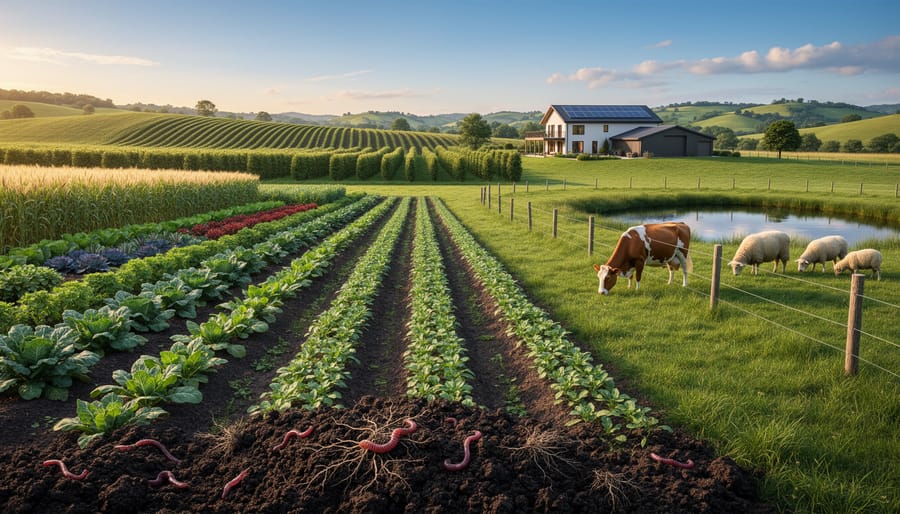
Every meal you eat represents a chain of environmental decisions, from the resources used to grow your food to how far it traveled to reach your plate. Understanding these connections transforms sustainable eating from abstract concept to tangible practice.
The journey begins at the farm, where food production consumes vast amounts of water, land, and energy. Beef production, for instance, requires roughly 15,000 liters of water per kilogram of meat, while lentils need just 1,250 liters. Land use tells a similar story, raising livestock demands far more acres than growing equivalent plant-based protein. These resource differences matter because agriculture already uses 70% of global freshwater and half of all habitable land.
Greenhouse gas emissions represent another critical mechanism. The environmental impacts of food vary dramatically by type, beef generates about 60 kilograms of CO2 equivalent per kilogram of product, while vegetables produce less than two. These emissions come from methane released by livestock, fertilizer production, and the energy used in farming operations. Choosing lower-emission foods works much like choosing a zero energy home both reduce your environmental footprint through smarter resource management.
Transportation, processing, and packaging add layers of impact. Foods flown across continents carry higher carbon costs than locally grown alternatives. Heavily processed items require more energy and generate more waste than whole foods. Even refrigeration throughout the supply chain consumes significant electricity.
The final piece involves what happens after you buy food. Roughly one-third of all food produced globally gets wasted, representing squandered water, land, energy, and emissions. When food decomposes in landfills, it releases methane, a greenhouse gas 25 times more potent than carbon dioxide.
These mechanisms work together, creating measurable differences based on what you choose to eat.
The Building Blocks of a Sustainable Diet
Plant-Forward Approaches
Plant-forward eating doesn’t demand an all-or-nothing commitment. It simply means making plants the star of your plate more often, whether that’s shifting from a beef-centered dinner to a chickpea curry or adding an extra serving of vegetables to your usual meal rotation.
A flexitarian approach, eating mostly plants while keeping occasional meat or fish, suits many people’s lifestyles and still delivers substantial environmental benefits. Livestock production accounts for significant greenhouse gas emissions and land use, so even reducing meat consumption by half creates measurable impact. Vegetarian diets eliminate meat entirely but retain dairy and eggs, further lowering your environmental footprint. Mediterranean-style eating emphasizes vegetables, legumes, whole grains, and olive oil with modest amounts of fish and poultry, balancing cultural food traditions with sustainability.
The beauty lies in flexibility. You’re not abandoning foods you love; you’re recalibrating their role in your diet and discovering new favorites along the way.
Local and Seasonal Eating
Choosing foods that grow near you and in their natural season cuts down on transportation emissions and storage energy while supporting regional farmers. Winter squash in autumn, asparagus in spring, and tomatoes in summer taste better and require fewer resources than produce shipped thousands of miles or grown in heated greenhouses year-round.
Start by exploring farmers markets where you can meet growers directly and ask about their practices. Many authentic local producers share harvest schedules and growing methods openly. Look for Community Supported Agriculture (CSA) programs that deliver seasonal shares, connecting you to what’s thriving in your area right now.
Some luxury brands source regionally while maintaining year-round availability through preservation methods like freezing or fermenting at peak ripeness. Check labels for origin details and harvest dates. True seasonal eating means embracing variety throughout the year rather than expecting strawberries in December.
Reducing Food Waste
Food waste carries a hidden environmental cost that rivals the impact of what we choose to eat. When food ends up in landfills, it generates methane, a greenhouse gas far more potent than carbon dioxide, while the water, energy, and land used to produce that food go to waste. In North America, households discard roughly 30% of purchased food, making this one area where small changes yield outsized results.
Start with meal planning: buy only what you’ll realistically use within a week, and check your fridge before shopping to avoid duplicates. Store produce properly, leafy greens in breathable bags, onions away from potatoes, to extend freshness. Turn wilting vegetables into soups or smoothies rather than tossing them. Save vegetable scraps (carrot peels, onion ends, celery leaves) in a freezer bag to make homemade stock later.
Think beyond the kitchen too: composting food scraps at home closes the loop on unavoidable waste, much like recycling helps divert other materials from landfills. Even repurposing leftovers into new meals, Monday’s roast chicken becomes Wednesday’s grain bowl, prevents waste while saving money and time.
Where Sustainable Diets Make the Biggest Impact

Your food choices ripple outward in ways that extend well beyond your own kitchen. When enough people shift even part of their diet toward sustainable options, the cumulative effect reshapes markets, farming practices, and entire food systems.
Start with what you can measure on a personal level. Research consistently shows that plant-forward diets lower risk for heart disease, type 2 diabetes, and certain cancers while reducing your environmental footprint. You get healthier, and so does the planet. That’s not an abstract trade-off or a sacrifice, it’s a genuine win on both fronts.
Then consider your community. When you buy from local farmers markets or choose regional producers, you’re funding food systems that keep money circulating close to home. Those farmers can afford to invest in soil health, biodiversity, and humane livestock practices because they have loyal customers willing to pay fair prices. Your regular purchases become a vote for the kind of agriculture you want to see flourish in your region.
The brands you support matter, too. Companies like Patagonia Provisions, which sources regeneratively-grown grains and responsibly-caught seafood, or Alter Eco, known for its carbon-neutral chocolate bars, demonstrate that sustainable food can be a premium experience rather than a compromise. When brands like these succeed, they pressure mainstream competitors to raise their standards. The entire industry shifts incrementally toward better practices.
Agricultural impact operates on the longest timeline but potentially the largest scale. Farmers respond to what sells. As demand grows for organic produce, pastured meat, and regeneratively-grown ingredients, more growers adopt methods that rebuild soil, sequester carbon, and protect watersheds. You won’t see the transformation overnight, but consistent consumer choices create the economic conditions that make sustainable farming viable and eventually normal.
The leverage point is surprisingly simple: eat a bit differently, choose thoughtfully when you shop, and those small decisions accumulate into market signals powerful enough to change how food gets grown.
Making Sustainable Eating Work for You
The gap between understanding sustainable eating and actually living it comes down to workable strategies that fit your real life. Start where you are, not where you think you should be.
The most common barrier is cost, but sustainable eating doesn’t require shopping exclusively at boutique markets or buying premium organic everything. Focus on where you get the most environmental impact for your dollar. Dried beans and lentils cost pennies per serving and deliver massive sustainability wins compared to meat. Seasonal produce from local farmers markets often costs less than shipped-in alternatives while supporting regional growers. Reducing food waste saves money directly, every wilted vegetable you throw away represents wasted grocery dollars and environmental resources.
Convenience matters too. You don’t need to transform your kitchen overnight or master complicated recipes. Small swaps create momentum without disruption. Try these accessible starting points:
- Swap one meal per week to plant-based and gradually increase from there
- Visit farmers markets monthly to discover what grows locally in each season
- Choose seasonal produce at your regular grocery store, which is usually cheaper and fresher
- Plan three dinners ahead each week to buy only what you’ll use and reduce waste
- Support one or two certified sustainable brands in categories you already buy
When local options feel limited, remember that sustainable eating isn’t all-or-nothing. A perfectly sustainable diet that you abandon in two weeks helps nobody. The diet you can maintain long-term, even if imperfect, creates lasting positive impact.
Track your wins rather than your shortcomings. Celebrate choosing the plant-based option twice this week. Notice when you finish groceries before they spoil. These small, consistent choices compound over time into genuine environmental benefit and become habits that require less conscious effort as months pass.
Common Questions About Diet Sustainability
Is sustainable eating more expensive?
It can be, but it doesn’t have to be. While some organic or specialty products cost more, sustainable eating often means buying whole foods, reducing meat consumption, and cutting waste, all of which can lower your grocery bill. Shopping seasonally and supporting local farmers’ markets frequently offers better value than premium supermarket options.
Can I still eat meat and maintain a sustainable diet?
Yes. Sustainable eating doesn’t require eliminating meat entirely. The focus is on reducing frequency and choosing higher-quality, responsibly-raised options when you do eat it. Even cutting meat consumption by half creates meaningful environmental benefits while allowing flexibility in your meals.
What about imported superfoods, are they sustainable?
It’s complicated. Some imported foods like quinoa or avocados have lower overall environmental footprints than local animal products, despite transportation emissions. Look at the complete picture: how the food was grown, its water requirements, and whether it supports fair labor practices in its region of origin.
How do I know if a brand is truly sustainable?
Look for third-party certifications like USDA Organic, Rainforest Alliance, or Fair Trade, which verify specific standards. Read beyond marketing language to find concrete information about sourcing, waste reduction, and labor practices. Genuine sustainable brands are transparent about their supply chains and honest about areas where they’re still improving, much like the transparency you’ll find in eco-friendly fabrics featured across sustainable industries.
The most common barrier to sustainable eating isn’t knowledge, it’s the fear of doing it perfectly. Start with one change that feels manageable, whether that’s meatless Mondays, buying seasonal produce, or choosing one sustainable brand you trust. Small, consistent choices compound over time, and every meal is a fresh opportunity to align your values with your plate.
Every meal is a vote for the kind of food system you want to support. That’s the heart of diet sustainability, not perfection, but direction. The choices you make at breakfast, the brands you trust, the produce you pick up on Tuesday evening, they all add up to something larger than a single plate.
You don’t need to overhaul your entire life overnight. Start where it feels natural: maybe that’s choosing a local bakery over mass-produced bread, cooking one extra plant-based dinner each week, or supporting a brand that genuinely walks its sustainability talk. Small shifts compound over time, creating ripples that extend far beyond your kitchen.
The sustainable eating journey looks different for everyone, shaped by where you live, what you value, and what resources you have access to. Some days you’ll make the ideal choice; other days you’ll do your best with what’s available. Both matter. Progress beats perfection every time.
As you continue exploring sustainable food choices, remember that Planet Forward highlights brands and practices making eco-friendly eating both achievable and genuinely appealing. Your curiosity and willingness to try something different, that’s where real change begins.