 larry
A sustainable kitchen transforms your cooking space into an eco-friendly hub by reducing waste, conserving energy, and choosing materials that minimize environmental impact. The changes support better eating habits through mindful food storage, composting systems that close the nutrient loop, and efficient appliances that make sustainable eating easier to maintain daily.
The path forward isn’t about perfection or expensive overhauls. Small shifts create meaningful change: swapping single-use plastics for reusable containers, choosing energy-efficient appliances when replacements are needed, and organizing your space to prevent food waste. Whether you rent or own, have a sprawling kitchen or a compact galley, sustainability adapts to your reality.
This approach goes beyond aesthetics. A well-designed sustainable kitchen saves money over time, reduces your carbon footprint, and creates healthier patterns around food preparation and consumption. The best part? You can start today with changes that fit your budget and living situation, building momentum as you discover what works for your household.
Why Your Kitchen Environment Influences Food Choices
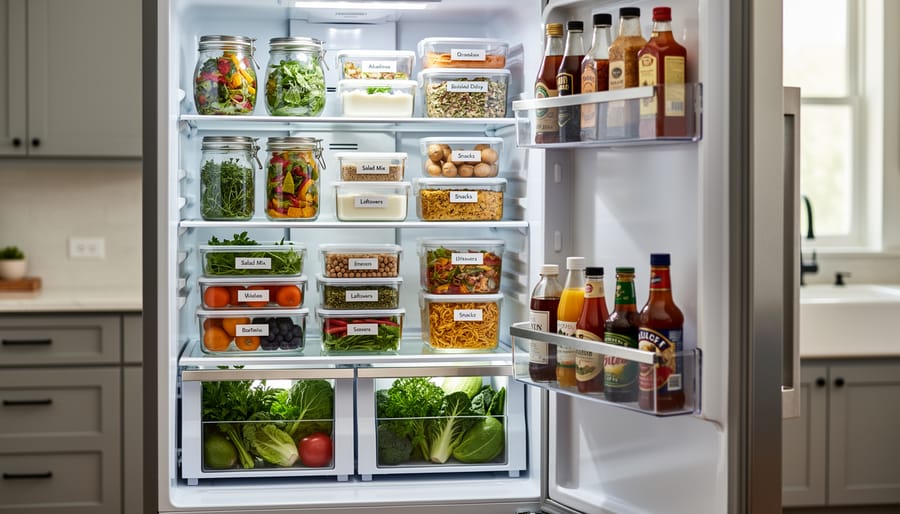
Your kitchen layout quietly steers hundreds of food decisions each week, often without you noticing. When fresh vegetables sit front and center in clear containers, you’re far more likely to grab them for dinner than if they’re wilting unseen in opaque crisper drawers. The physical arrangement of your cooking space creates friction or flow around the choices you make, and those accumulated micro-decisions determine whether you lean toward sustainable eating or default to convenience.
Visibility governs behavior. Research consistently shows that we eat what we see first and ignore what’s hidden. A bowl of seasonal fruit on the counter gets eaten. Produce buried at the back of the fridge gets composted, wasted. The same principle applies to sustainable staples like bulk grains, nuts, and dried beans. Store them in glass jars on open shelving, and they become dinner ingredients. Tuck them away in unmarked containers, and you’ll order takeout instead.
Accessibility shapes effort calculations. If your blender sits behind three other appliances, you won’t make smoothies with overripe fruit. If reusable containers require opening four cabinets, you’ll reach for disposable options. A well-organized sustainable kitchen places the right tools within arm’s reach of where you’ll use them. Cutting boards near the prep zone. Compost bin next to where you chop. Storage containers beside the stove for immediate leftover transfer.
Tool availability determines possibilities. You can’t ferment vegetables without proper jars, roast efficiently without quality bakeware, or store bulk purchases without adequate containers. The equipment you own, maintain, and keep accessible literally defines your range of sustainable cooking options. A kitchen stocked with single-use gadgets pushes you toward processed convenience. One designed around versatile, durable tools opens pathways to cooking from scratch, preserving abundance, and minimizing packaging waste.
Essential Elements of a Sustainable Kitchen
Energy-Conscious Appliances and Cookware
Swapping conventional appliances for energy-efficient models cuts your carbon footprint and transforms how you cook. Induction cooktops stand out here: they heat only the pan, not the surrounding air, using 85 to 90 percent of the energy they draw compared to gas stoves’ 40 percent. That precision means faster boiling, safer surfaces, and cleaner indoor air, which matters in an energy-saving home.
Look for ENERGY STAR-certified refrigerators and dishwashers. A new fridge can use half the electricity of a 15-year-old model, and modern dishwashers beat handwashing on both water and energy when you run full loads. Brands like Bosch and Miele build appliances that last decades, reducing the waste cycle of cheap replacements.
Cookware matters just as much. Cast iron and stainless steel outlive nonstick pans by years and require no synthetic coatings. For eco-conscious options, consider ceramic-coated pans from GreenPan or recycled aluminum from Made In. These materials distribute heat evenly, letting you cook at lower temperatures and save energy with every meal. The upfront cost stings less when you calculate the lifespan and the avoided replacements.
Food Storage Solutions That Minimize Waste
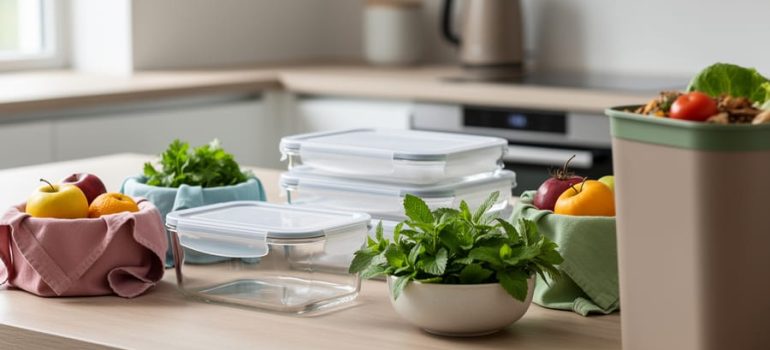
The right storage setup transforms how long your food stays fresh and how much you actually eat before it spoils. Transparent containers solve the “out of sight, out of mind” problem that sends perfectly good ingredients to the compost bin. Glass containers with airtight seals keep produce crisp for days longer than plastic bags, and you can see exactly what needs using up when you open the fridge.
Beeswax wraps replace single-use plastic for covering bowls and wrapping cheese, bread, or cut vegetables. They mold to whatever you’re covering, breathe enough to prevent moisture buildup, and last about a year with regular use. For dry goods, uniform glass jars in your pantry make inventory obvious at a glance, no more buying a third bag of quinoa because you couldn’t see the two you already had.
Drawer organization matters as much as containers. Dedicated vegetable drawers with humidity control keep greens from wilting prematurely, while herb savers with water reservoirs extend basil and cilantro life by a week. A “use first” bin at eye level in your fridge captures odds and ends that need attention within a day or two.
Storage isn’t just about preservation, it’s about creating a visual inventory system that reminds you what you have. When ingredients stay visible and accessible, you naturally build meals around what’s on hand rather than defaulting to takeout while fresh food goes bad.
Composting and Waste Management Systems
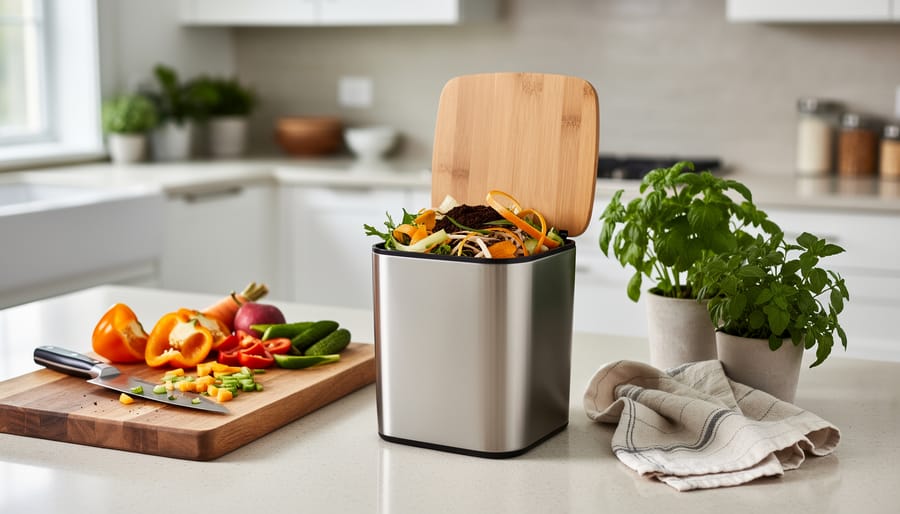
Effective waste management starts with making the right choice automatic. Position three clearly labeled bins within easy reach, compost, recycling, and landfill, so sorting becomes effortless during meal prep and cleanup. Understanding how recycling helps motivates consistent participation when bins are convenient rather than tucked away.
For composting, countertop electric composters like Lomi or FoodCycler transform scraps into usable soil in hours, ideal for apartments or limited outdoor access. They contain odors and process everything from vegetable peels to coffee grounds without maintenance-heavy turning. If you have outdoor space, a simple tumbling composter handles larger volumes while keeping pests away.
Under-sink pull-out systems maximize vertical space in smaller kitchens, concealing sorting bins while keeping them accessible. Look for models with removable, washable containers and smooth-gliding tracks.
The key is placement: waste stations should sit near your main prep area, not across the kitchen. When sustainable disposal requires zero extra steps, it becomes your default rather than an occasional effort.
Water Conservation Practices
Water conservation in the kitchen starts with two straightforward upgrades: a faucet aerator and a low-flow spray head. These devices reduce water flow by 30-50% without noticeably affecting pressure, typically costing under $15 each and installing in minutes.
For dishwashing, the most sustainable approach is running a full dishwasher rather than hand-washing, modern machines use about three gallons compared to 27 gallons for hand-washing the same load. If you must hand-wash, fill one basin with soapy water and another for rinsing instead of letting the tap run continuously.
Save vegetable-washing and pasta-cooking water for plants or cleaning. Keep a pitcher by the sink to catch cold water while waiting for hot water to arrive, then use it for drinking or cooking. These simple shifts can cut kitchen water use by 40% without disrupting your routine.
Daily Kitchen Habits That Support Sustainable Eating
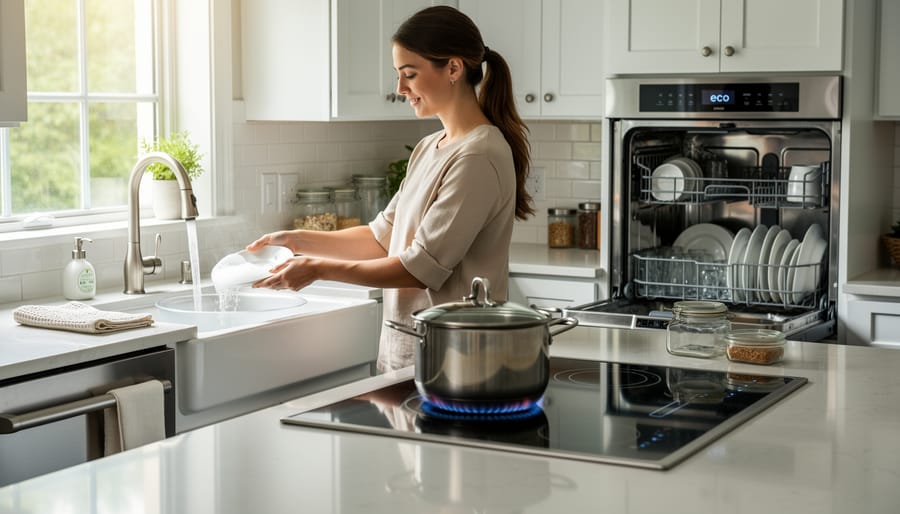
The routines you build in your kitchen matter more than the equipment you own. Sustainable eating happens when your daily habits align with your environmental values, and the best habits are the ones that feel effortless because they’re woven into your existing rhythm.
Start with meal planning that reduces waste before it happens. Dedicate fifteen minutes each week to survey what’s already in your fridge and pantry, then plan meals around those ingredients first. This simple inventory prevents the common cycle of buying duplicates while fresh produce spoils in the crisper drawer. When you build your shopping list, group items by store section and stick to it, impulse purchases often lead to excess packaging and unused food. The connection between planning ahead and diet sustainability becomes clear when you realize how much less you discard.
Batch cooking transforms your relationship with weeknight meals. Choose one or two days each week to prepare base components, roasted vegetables, cooked grains, beans from dried, that can be mixed and matched throughout the week. This approach reduces energy use by running your oven or stovetop less frequently, and it makes eating at home more appealing than ordering takeout in single-use containers. Store these components in clear glass containers at eye level so you actually use them.
Embrace seasonal eating by learning what grows locally during different months. Farmers market visits aren’t just for weekends, many markets now offer weekday hours, and building a relationship with one or two vendors helps you understand what’s truly in season versus what’s been shipped across continents. Seasonal produce tastes better, costs less, and requires less energy to reach your kitchen.
Here’s a practical weekly routine that builds sustainable habits:
- Sunday evening: Take inventory of what needs using this week and plan three to four meals around those ingredients
- Monday: Shop with your planned list, bringing reusable bags and produce bags to eliminate plastic at checkout
- Tuesday: Prep and store vegetables immediately after shopping, wash greens, chop root vegetables, portion anything that spoils quickly
- Wednesday or Thursday: Batch cook grains, proteins, and roasted vegetables for easy assembly meals
- Friday: Use up odds and ends in a flexible dish like soup, fried rice, or frittata before the weekend
- Saturday: Evaluate what worked, what went to waste, and adjust next week’s approach accordingly
The ritual of washing and reusing containers, composting scraps as you cook, and storing leftovers properly becomes automatic within a few weeks. You’ll find yourself naturally reaching for the reusable produce bag or thinking twice before buying pre-cut vegetables in plastic clamshells. These aren’t burdensome sacrifices, they’re efficient practices that save money, reduce decision fatigue, and quietly reinforce your commitment to eating sustainably without announcing it.
Making the Transition: Where to Start
Starting your kitchen sustainability journey doesn’t require a complete overhaul or a hefty budget. The most effective approach is identifying one or two changes that align with your current lifestyle and priorities.
Begin with the highest-impact, lowest-effort shifts. Switching to reusable storage containers instead of disposable bags eliminates waste immediately and costs less than $30 for a starter set. Installing a faucet aerator takes five minutes and cuts water use by half. These changes require minimal effort but create visible, lasting results.
Next, audit what you already have. That rarely-used bread maker gathering dust could become your weekly meal prep tool. Existing mason jars can replace expensive specialized containers. You’re already closer to a sustainable kitchen than you might think.
When budget matters, prioritize items you use daily. A quality chef’s knife that lasts decades beats a drawer full of disposable kitchen gadgets. One excellent cast-iron pan outperforms a collection of nonstick cookware you’ll replace every few years. Choose durability over quantity.
Track one simple metric to stay motivated, gallons of food scraps composted, plastic bags avoided, or meals cooked from scratch. Watching these numbers grow reinforces that your small actions matter.
Remember that sustainable kitchens evolve gradually. Each choice builds on the last, creating momentum that makes the next step easier. Start where you are, use what you have, and let progress unfold naturally.
Common Questions About Kitchen Sustainability
The shift toward a more sustainable kitchen raises practical questions, especially when juggling real-world constraints like tight budgets, rental agreements, or hectic schedules. These common concerns shouldn’t stop you from making meaningful changes, most sustainable kitchen practices are more accessible than they first appear.
Is creating a sustainable kitchen expensive?
Not necessarily. Start with low-cost changes like switching to reusable containers you already own, installing a faucet aerator for under $10, or simply reorganizing your fridge to reduce food waste. You can phase in bigger investments like energy-efficient appliances as your old ones wear out, spreading costs over time.
What if I rent and can’t make permanent changes?
Focus on portable solutions: countertop composters, removable under-sink organizers, and personal cookware choices all work in rentals. Most impactful changes, like meal planning, proper food storage, and conscious shopping, require no landlord approval at all.
How do I maintain sustainable practices when I’m short on time?
Batch cooking on weekends, keeping a running grocery list to avoid extra trips, and choosing a few simple swaps (reusable bags, glass containers) prevent sustainable habits from becoming overwhelming. Sustainability actually saves time once systems are in place.
How can I get my family on board with kitchen sustainability?
Make participation easy and positive, label compost bins clearly, assign age-appropriate tasks like rinsing containers for recycling, and celebrate wins together when you cut waste or try a new seasonal recipe. When sustainable choices become the default rather than extra work, resistance fades.
Many people worry that sustainable kitchens demand perfection or complete lifestyle overhauls. The truth is simpler: consistency beats intensity. Using what you already have until it wears out, then replacing it thoughtfully, creates far less waste than tossing functional items to buy “greener” versions immediately. A single reusable water bottle used daily for years outweighs a drawer full of barely-used eco-products.
The convenience question deserves honesty. Some sustainable practices, washing cloth napkins, maintaining a compost bin, do require a bit more effort than disposable alternatives. But most people find that trade-off worthwhile once habits form, especially when they see reduced grocery bills and less trash heading to the curb. The goal is progress that fits your life, not rigid rules that create stress.
Your kitchen is more than a collection of appliances and countertops, it’s the foundation of your relationship with food and the environment. The choices you make in this space ripple outward, shaping not just what you eat, but how you think about consumption, waste, and your impact on the planet.
A sustainable kitchen doesn’t demand perfection or a complete overhaul overnight. It’s about building an environment where eco-conscious decisions become second nature. When fresh produce sits at eye level instead of buried in a drawer, you’ll reach for it. When your compost bin is as accessible as your trash can, food scraps find their way to the right place. These small design choices quietly guide you toward healthier, more sustainable patterns without constant willpower.
The beauty of kitchen sustainability lies in its cumulative effect. One reusable container leads to another. An efficient appliance inspires mindful cooking. A well-organized pantry prevents waste and sparks creativity with ingredients you already have.
Start where you are. Pick one change that feels manageable, maybe it’s swapping plastic wrap for beeswax alternatives, or finally setting up that recycling station you’ve been considering. That single shift creates momentum, transforming your kitchen from a space where you simply prepare meals into one that actively supports the lifestyle you’re working toward.