 larry
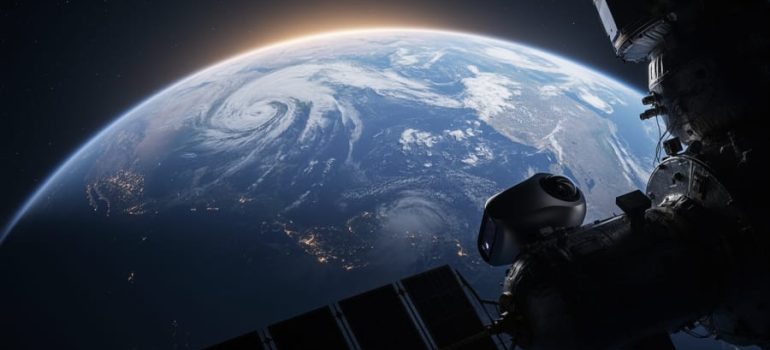
larryEvery night, billions of artificial lights transform Earth’s darkness into an orange glow visible from space. While city lights might seem harmless or even beautiful, this constant illumination is disrupting ecosystems in ways most of us never consider.
Light pollution occurs when excessive or misdirected artificial light brightens the night sky, and its environmental impact extends far beyond blocking our view of stars. Nocturnal wildlife depends on natural darkness for survival. Migrating birds become disoriented by illuminated buildings, with an estimated 600 million birds dying annually in North America alone from collisions caused by light confusion. Sea turtle hatchlings, programmed to follow moonlight to the ocean, instead crawl toward coastal streetlights and perish. Insects, drawn to artificial lights in a fatal attraction scientists call “vacuum cleaner effect,” experience population crashes that ripple through entire food webs.
The consequences reach into ecosystems you might not expect. Trees exposed to continuous artificial light can’t properly enter dormancy, making them vulnerable to frost damage and disease. Predator-prey relationships shift when darkness no longer provides cover. Even microscopic organisms like plankton alter their vertical migration patterns, disrupting marine food chains from the bottom up.
Understanding these impacts matters because solutions exist and they’re surprisingly accessible. From simple changes in outdoor lighting choices to community-wide dark sky initiatives, we can restore natural night cycles without sacrificing safety or functionality. The encouraging truth? Small adjustments in how we light our spaces can create meaningful environmental change, protecting the countless species that still need darkness to thrive.
What Is Light Pollution and Why Should We Care?
Light pollution is the excessive or misdirected artificial light that brightens our night skies and spills into natural environments where darkness should prevail. It’s not just about losing our view of the stars, though that’s part of the loss. This form of pollution represents unwanted artificial illumination that disrupts the natural patterns of light and dark that life on Earth has evolved with for billions of years.
When we talk about light pollution, we’re actually describing several distinct problems. Understanding these types helps us recognize the issue in our own communities:
- Sky Glow
- The bright haze that hangs over urban areas at night, created when artificial light scatters in the atmosphere and obscures our view of the night sky.
- Glare
- Excessive brightness that causes visual discomfort or reduces visibility, like the blinding effect of an unshielded floodlight pointed directly at your eyes.
- Light Trespass
- Unwanted artificial light that spills beyond its intended area, such as a streetlight shining into your bedroom window or illuminating a natural habitat.
- Clutter
- The excessive grouping of bright, confusing lights, commonly seen in overly-lit commercial districts where multiple light sources compete for attention.
For those of us committed to sustainable living, light pollution matters because it affects environmental quality at every level. Artificial light at night is one of the less frequently reported impacts of human activity on the environment, yet it disrupts ecosystems, endangers wildlife, and threatens the pollinators we depend on. Every unnecessary watt of outdoor lighting represents wasted energy and a barrier to the thriving natural world we’re working to protect. The good news? Unlike many environmental challenges, this one has straightforward, achievable solutions that begin with awareness and better choices.
The Hidden Impact on Wildlife: How Artificial Light Disrupts Nature
The Insect Crisis: An Overlooked Cause of Decline
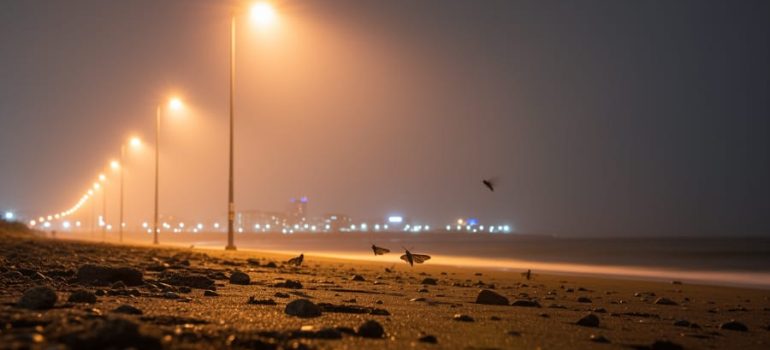
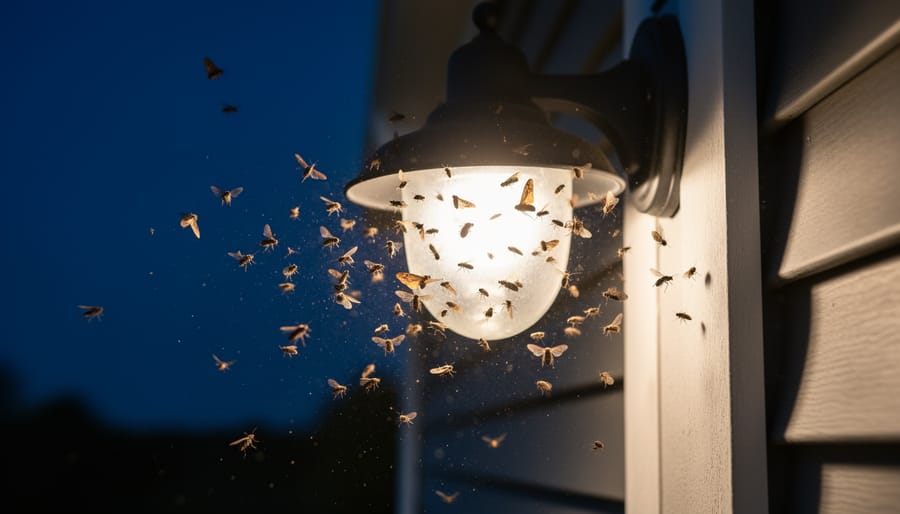
The insects fluttering around streetlights at night aren’t just drawn to the glow, they’re caught in a deadly trap. Artificial light disrupts their navigation, confuses their mating signals, and exhausts them as they circle endlessly instead of feeding or reproducing. This relentless attraction to light is a significant, though often ignored, driver of insect declines from light pollution worldwide. When insect populations collapse, the consequences ripple through entire food webs. Birds lose crucial protein sources, plants go unpollinated, and decomposition slows. A single streetlight can remove hundreds of insects from the ecosystem each night, multiplying this impact across millions of lights. The sobering reality? We’re dimming biodiversity one bulb at a time, removing the tiny creatures that hold ecosystems together.
Birds, Turtles, and Marine Life at Risk
Seabirds face lethal confusion during migration. Coastal lighting disorients millions of birds each year, causing them to veer off course and collide with buildings or drop from exhaustion. Shearwaters and petrels, which navigate by moonlight and starlight, become trapped in urban light beams, circling until they crash. Research on bird mortality from light reveals the scale of this preventable tragedy.
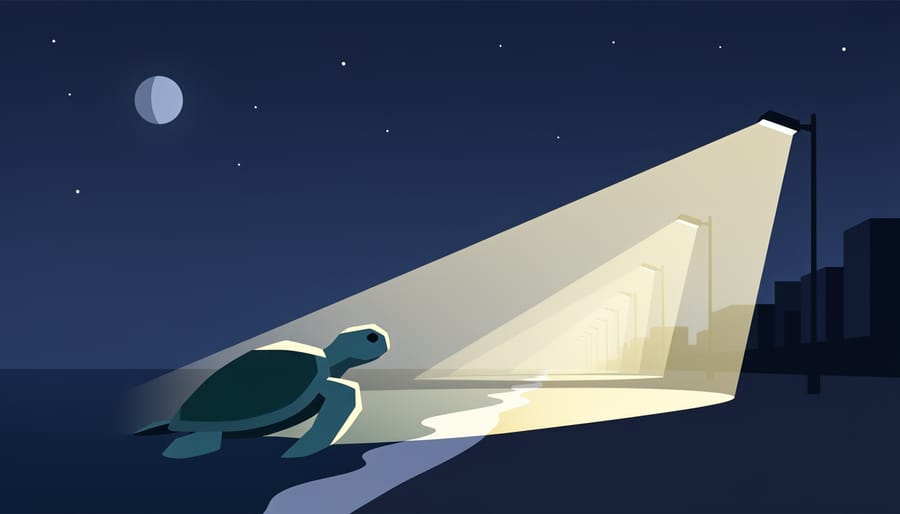
Sea turtles experience equally devastating impacts. Hatchlings instinctively crawl toward the brightest horizon, which should be moonlight reflecting off ocean waves. Instead, beachfront lighting lures them inland toward roads and predators. Adult females avoid brightly lit nesting beaches altogether, shrinking critical breeding habitat year after year.
Shorebirds lose essential feeding time. Species like sandpipers and plovers rely on darkness to safely forage along coastlines. Artificial light exposes them to predators during vulnerable nighttime feeding, forcing them to alter centuries-old behavioral patterns. The disruption ripples through their entire life cycle, affecting migration timing, breeding success, and survival rates across generations.
How Light Pollution Disrupts Entire Ecosystems
When individual species suffer from light pollution, entire ecosystems begin to unravel. The environmental consequences reach far beyond a single disoriented bird or confused insect. Artificial light at night disrupts photosynthesis and activity across multiple species groups simultaneously, creating cascading effects that ripple through food webs and natural cycles.
Plants are particularly vulnerable to this disruption. Many species rely on specific light-dark cycles to regulate flowering, leaf production, and seasonal dormancy. When artificial light extends their perceived day length, these fundamental processes get thrown off schedule. Trees near streetlights often hold onto their leaves longer in autumn, making them more susceptible to early frost damage and reducing their ability to store energy for spring growth.
The timing matters enormously. Pollinators like moths and beetles that feed primarily at night find themselves disoriented by artificial light, abandoning flowers that depend on their visits. Meanwhile, the plants relying on these nighttime pollinators produce fewer seeds, affecting the animals that feed on those seeds. One disrupted relationship triggers another.
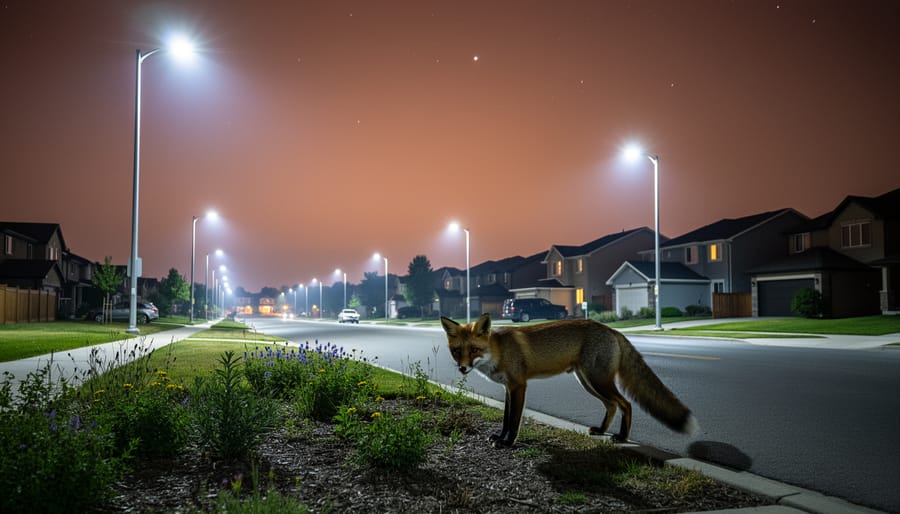
Predator-prey dynamics shift in unexpected ways under artificial light. Bats hunting insects near streetlights might seem to benefit from the easy meal, but their prey species decline over time, and light-averse bat species avoid lit areas entirely, reducing their hunting grounds. Small mammals become more visible to predators under artificial light, altering their foraging patterns and the seed dispersal they provide.
These interconnected disruptions compound over time. When insect populations crash, birds that feed on them struggle to raise their young. When plants miss their pollination windows, the herbivores depending on their seeds face food shortages. The full environmental cost of light pollution emerges not from any single impact, but from the way it fractures the delicate synchronization that healthy ecosystems require to function.
Beyond Wildlife: Human Health and Environmental Quality
The environmental toll of artificial light extends directly to us. Excessive artificial light disrupts our sleep cycles, suppresses melatonin production, and has been linked to increased risks of obesity, depression, and certain cancers. When streetlights flood our bedrooms or outdoor glare intrudes into living spaces, the impact isn’t just annoying, it’s measurably harmful to our physical and mental health. This connection between light pollution and human well-being matters because it makes the crisis personal and urgent.
Beyond individual health, light pollution degrades overall environmental quality in ways that affect everyone. Wasted outdoor lighting consumes massive amounts of energy, contributing to unnecessary carbon emissions and climate change. The glow that washes out our night skies represents billions of kilowatt-hours annually that could be conserved. Communities are increasingly recognizing this overlap between light pollution and energy waste, which is why thoughtfully designed eco-friendly homes now incorporate shielded, lower-intensity outdoor lighting as standard practice.
Addressing light pollution improves air quality, reduces energy costs, and creates healthier living environments. The issue connects wildlife impacts, ecosystem disruption, and human flourishing into a single, solvable challenge. When we reduce unnecessary artificial light, we’re not just helping sea turtles and migratory birds, we’re investing in cleaner air, better sleep, and more sustainable communities for ourselves and future generations.
Solutions That Make a Difference: What We Can Do in 2026
The good news? Light pollution is one of the most reversible environmental problems we face. Unlike carbon emissions or plastic waste, the moment we turn off unnecessary lights, the harm stops. In 2026, more sustainable lighting options exist than ever before, and conscious consumers are driving real change by demanding better products and practices.
Start with your outdoor lighting. Swap harsh, blue-white LEDs for warm-spectrum bulbs (3000K or lower), which produce less disruptive light while still providing visibility. When incorporating sustainable home design principles, think beyond aesthetics to include lighting that protects nocturnal wildlife. Shield all outdoor fixtures so light points downward where you need it, not upward into the sky or sideways into natural habitats. Motion sensors and timers ensure lights operate only when necessary, cutting energy use and reducing wildlife disturbance simultaneously.
Here are practical steps you can take right now:
- Replace outdoor bulbs with warm-spectrum LEDs rated at 3000K or lower to minimize blue light emissions that harm wildlife most.
- Install fully-shielded fixtures that direct light downward only, preventing sky glow and light trespass into neighboring ecosystems.
- Add motion sensors or timers to outdoor lights so they activate only when needed, drastically reducing unnecessary illumination hours.
- Support local dark-sky initiatives by advocating for responsible lighting ordinances in your community and encouraging businesses to adopt wildlife-friendly practices.
- Choose sustainable lighting brands that prioritize both environmental impact and responsible design, using eco-friendly materials and thoughtful engineering.
Beyond your own property, advocate for change. Encourage local businesses and municipalities to adopt dark-sky-friendly lighting policies. Many communities have discovered that better-designed lighting actually improves safety while cutting energy costs and protecting wildlife. When selecting sustainable decor and home products, extend that same thoughtful approach to your lighting choices.
The shift doesn’t require sacrifice. Well-designed outdoor lighting enhances safety and beauty while respecting the night. By making informed choices about when, where, and how we light our spaces, we create environments where both people and wildlife can thrive.
Light pollution stands as a critical yet solvable environmental challenge. The evidence is clear: artificial light at night disrupts photosynthesis, drives insect declines, disorients birds and sea turtles, and unravels the delicate connections that hold ecosystems together. But unlike many environmental crises, this one has straightforward solutions within our reach right now.
Every choice we make about outdoor lighting matters. When you switch to shielded fixtures, reduce unnecessary illumination, or support brands committed to dark-sky principles, you’re directly protecting wildlife and restoring natural rhythms. Communities across the globe are proving that we can maintain safety and visibility while giving darkness back to the creatures that need it.
The path forward doesn’t require sacrifice, it requires awareness and intention. By making informed lighting choices in 2026, we’re not just reducing environmental harm. We’re actively participating in a movement that reconnects urban spaces with the natural world, proving that sustainability and modern life can coexist beautifully. The night sky, and the countless species that depend on it, are counting on the decisions we make today.