 larry
larryOur planet breathes through carbon sinks, nature’s invisible filtration system that absorbs more carbon dioxide than it releases. Think of them as Earth’s lungs: forests, oceans, soil, and wetlands quietly pulling greenhouse gases from the atmosphere and storing them for decades or even centuries. Without these natural allies, atmospheric CO2 levels would be climbing far faster than they already are.
Right now, carbon sinks absorb roughly half of all human-caused carbon emissions. That’s billions of tons of CO2 removed from the air each year, slowing the pace of climate change and buying us precious time to transition away from fossil fuels. The Amazon rainforest alone stores about 123 billion tons of carbon in its trees and soil. Oceans have absorbed nearly 30% of the carbon dioxide we’ve released since the Industrial Revolution.
But here’s what makes 2026 such a pivotal moment: these natural systems are showing signs of strain. Deforestation, ocean warming, and soil degradation are weakening their capacity to help us. Some scientists warn that certain carbon sinks could flip to carbon sources if we don’t protect them, releasing stored carbon back into the atmosphere instead of capturing it.
Understanding how carbon sinks work isn’t just academic curiosity. It’s about recognizing which ecosystems deserve our protection and support, which daily choices strengthen these natural climate solutions, and how we can ensure they continue functioning for generations to come. The good news? Small actions genuinely matter when millions of people take them together.
What Makes a Carbon Sink Work?
The carbon cycle is Earth’s constant exchange program, moving carbon between land, water, atmosphere, and every living thing. This perpetual circulation keeps our planet’s systems in balance, though human activity has thrown that equilibrium off course in recent decades.
Think of carbon as nature’s currency, changing hands continuously. Plants pull CO2 from the air during photosynthesis, storing it in their trunks, leaves, and roots. When those same plants die and decompose, microbes break them down and release that stored carbon back into the atmosphere. Meanwhile, oceans absorb massive amounts of atmospheric carbon, while soil locks it away in organic matter. Animals eat plants, breathe out CO2, and eventually return their carbon to the earth when they die. It’s a closed loop that has sustained life for millions of years.
The carbon cycle refers to the constant movement of carbon from the land and water through the atmosphere and living organisms.
Forests demonstrate this cycle beautifully. As trees grow, they sequester CO2, pulling it from the air and transforming it into wood, bark, and foliage. A single mature tree can absorb roughly 48 pounds of CO2 per year. But forests aren’t just carbon storage vaults. As trees decay naturally or burn in wildfires, they emit CO2 back into the atmosphere, completing the cycle. This dual nature means forests are simultaneously removing and releasing carbon, with their net impact depending on whether growth outpaces decay.
The process of carbon sequestration happens when carbon gets captured and stored for the long term, whether in tree trunks, ocean sediments, or soil layers. Natural systems excel at this work. Healthy forests, thriving wetlands, and intact coastal ecosystems act as carbon sinks, absorbing more CO2 than they release. When we protect these spaces, we’re preserving the planet’s built-in climate regulation machinery. When we destroy them through deforestation or development, we’re not just losing trees or wetlands, we’re dismantling the very systems that keep atmospheric carbon in check.
The Three Powerhouses: Types of Carbon Sinks
Forest Carbon Sinks: Our Green Allies
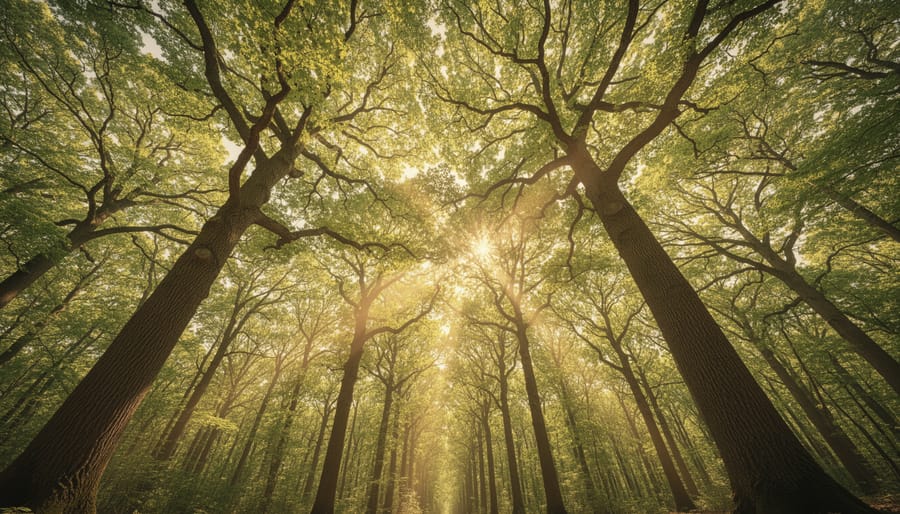
Forests act as living carbon vaults, pulling CO2 from the atmosphere as they grow and locking it away in trunks, branches, roots, and soil. This process happens tree by tree, season by season, as photosynthesis converts atmospheric carbon into plant tissue. A single mature tree can sequester hundreds of pounds of carbon over its lifetime, while entire forest ecosystems collectively hold billions of tons. Canada’s boreal forest carbon sink alone represents a globally significant reserve, stretching across millions of acres and storing carbon accumulated over centuries.
Yet forests don’t just capture carbon, they also release it. When trees die, decay, or burn, that stored CO2 returns to the atmosphere. This dual role means forests are constantly cycling carbon through growth and decomposition, acting as both sinks and sources depending on their health and age. Young, rapidly growing forests tend to capture more carbon than they release, while old-growth stands may reach equilibrium. Disturbances like wildfire or logging can flip a forest from sink to source almost overnight, releasing decades of stored carbon in weeks.
This balance matters enormously for global climate regulation. Forests currently absorb roughly a quarter of human-caused CO2 emissions, buffering the pace of warming. That makes protecting existing forests and encouraging regrowth one of the most direct ways to support planetary health, no complex technology required, just preserving what already works.
Blue Carbon: The Ocean’s Hidden Contribution
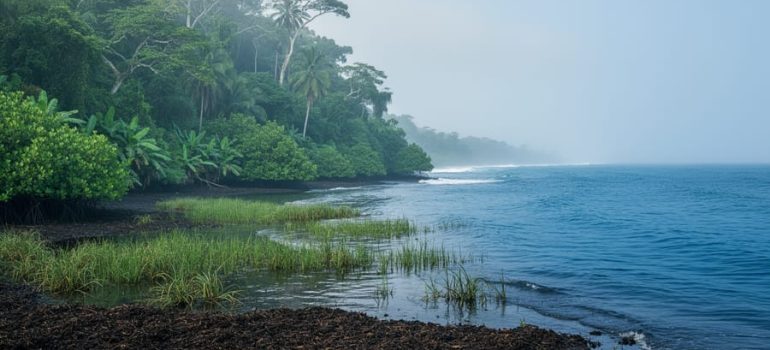
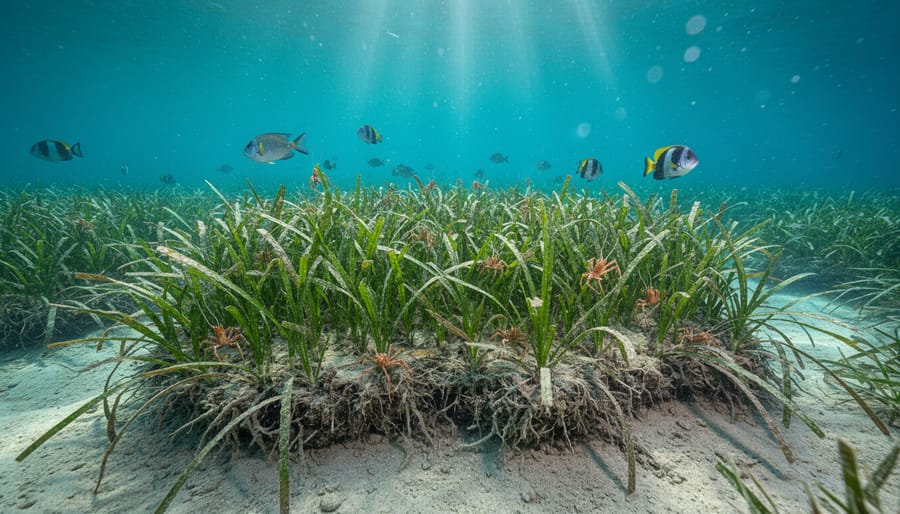
While forests often steal the spotlight in climate conversations, our oceans and coastal zones quietly perform one of the planet’s most impressive carbon-capture feats. These blue carbon ecosystems include mangroves, salt marshes, and seagrass beds that sequester carbon at rates far exceeding terrestrial forests, storing it in waterlogged soils where decay happens slowly and carbon remains locked away for centuries.
Mangrove forests, with their tangled root systems, trap sediment and organic matter along tropical and subtropical coastlines. Salt marshes do similar work in temperate zones, their dense plant growth pulling CO2 from the air and depositing it into thick layers of mud below. Seagrass meadows, stretching across shallow coastal waters, capture carbon not just in their blades but in the sediment beneath them, building up deposits that can be meters deep.
What makes blue carbon so effective is the waterlogged, low-oxygen environment. Underwater soils decompose organic matter slowly, meaning carbon gets stored rather than released back into the atmosphere. Canada’s 2030 Nature Strategy acknowledges that oceans help regulate the global climate, recognizing these coastal systems as critical partners in our climate toolkit alongside forests and peatlands.
The growing recognition of blue carbon’s role has sparked real policy attention. Environment and Climate Change Canada and Fisheries and Oceans Canada now explicitly address federal policies on blue carbon, marking a shift in how we think about coastal conservation. Protecting these ecosystems isn’t just about preserving habitat for fish and birds anymore. It’s about safeguarding one of our most powerful natural climate allies, hidden just beneath the waves.
Soil and Peatlands: The Underestimated Champions
Beneath our feet lies one of Earth’s most powerful climate allies, yet it’s one we rarely see or celebrate. Soil stores more carbon than the atmosphere and all plant life combined, quietly holding vast amounts of organic matter that would otherwise contribute to warming. Every handful of healthy soil contains billions of microorganisms working to break down plant material and lock carbon away for decades or even centuries.
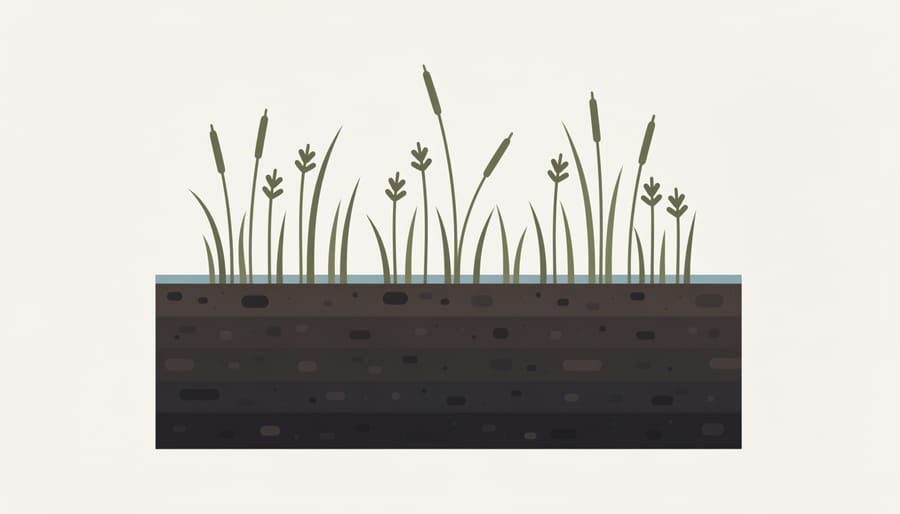
Peatlands take this carbon storage to extraordinary levels. These waterlogged ecosystems, formed over thousands of years from partially decomposed plant matter, hold roughly twice as much carbon as all the world’s forests despite covering just 3% of Earth’s land surface. When intact, they’re remarkably effective at keeping carbon out of the atmosphere. But when drained or disturbed, they flip from carbon sinks to carbon sources, releasing stored greenhouse gases at alarming rates.
Canada recognizes the outsized importance of these systems. The country’s 2030 Nature Strategy explicitly identifies peatlands as carbon sinks alongside the boreal forest, acknowledging their role in global climate regulation. Protecting them isn’t just about preserving habitat; it’s about maintaining one of our most reliable tools for managing atmospheric carbon. The good news? Conserving soil and peatlands often requires simply leaving them undisturbed, making protection one of the most straightforward climate actions we can take.
Why Carbon Sinks Are Under Threat in 2026
The very systems that remove carbon from our atmosphere are now losing ground, and the timeline is more urgent than many realize. Carbon sinks face a perfect storm of threats in 2026, each one amplifying the next in ways that challenge our planet’s natural balance.
Wildfires have intensified across boreal forests and other critical ecosystems, releasing decades of stored carbon in a matter of weeks. When these forests burn, they flip from carbon absorbers to carbon emitters, pumping CO2 back into the atmosphere at alarming rates. Deforestation compounds this problem, with clearing for agriculture and development removing the trees that would otherwise capture emissions for generations to come.
The feedback loop is what makes this moment particularly concerning. Increased concentrations of CO2 are causing changes in the Earth’s climate, leading to global warming that creates conditions for more fires, faster tree decay, and stressed ecosystems. A warmer climate means forests can’t sequester carbon as effectively, soils release more of what they’ve stored, and coastal wetlands face rising seas that threaten their survival.
Ocean acidification is quietly degrading marine carbon sinks while warming waters reduce their capacity to absorb CO2. Peatlands, recognized in Canada’s 2030 Nature Strategy as part of a globally significant carbon sink, are drying out and becoming vulnerable to fire themselves. Even healthy ecosystems are reaching their limits, unable to keep pace with the volume of emissions we’re producing.
What makes this particularly troubling is the speed. These aren’t gradual shifts but accelerating changes that demand immediate attention and thoughtful action to protect what remains.
Conservation Strategies That Make a Real Difference
Protecting carbon sinks doesn’t require waiting for sweeping policy changes. You can start making a difference today, and when individual actions combine with smart policy frameworks, the impact multiplies.
Canada’s 2030 Nature Strategy recognizes that peatlands and the boreal forest serve as globally significant carbon sinks, and federal departments like Environment and Climate Change Canada are building conservation efforts around this science. But policy alone won’t solve the problem. Real change happens when institutions and individuals work together.
Here’s how you can contribute to carbon sink conservation right now:
- Support reforestation projects in your region, whether through volunteering with local tree-planting groups or choosing brands that fund forest restoration as part of their sustainability commitments.
- Protect wetlands by advocating against development in these areas and supporting organizations working to conserve peatlands and marshes.
- Choose seasonal and local food options, which reduce agricultural pressures that convert carbon-rich lands into farmland and minimize transportation emissions.
- Reduce your environmental footprint in overlooked ways, from addressing light pollution to understanding pesticide impacts on soil health.
- Shop from eco-friendly brands that prioritize carbon-conscious practices, transparent supply chains, and habitat protection in their operations.
Sustainable land management matters too. Farmers and landowners can adopt practices like cover cropping and reduced tillage to keep carbon locked in soil rather than released into the atmosphere. When you support brands that source responsibly, you’re voting for these practices with your wallet.
The truth is, carbon sinks work best when we stop treating them as resources to extract and start seeing them as systems to nurture. Every wetland preserved, every forest protected, and every conscious purchase you make strengthens these natural climate allies.
Carbon sinks aren’t just a scientific curiosity. They’re working right now to pull carbon from the atmosphere, regulate our climate, and keep the planet livable. Protecting these systems is one of the most tangible ways we can support environmental health.
Every choice matters. When you support reforestation projects, choose products from brands committed to sustainable land management, or invest in eco-friendly homes that minimize environmental impact, you’re contributing to the preservation of these natural climate allies. You’re also sending a clear signal that responsible consumption and planetary stewardship aren’t optional extras, they’re essentials.
The forests, oceans, and peatlands quietly doing this work can’t advocate for themselves. But we can. By understanding how carbon sinks function and what threatens them, we’re better equipped to make daily decisions that honor these systems. That’s the kind of authentic, planet-forward living that creates real change, one thoughtful choice at a time.